

Commissioning a custom desk: size, cables and finish
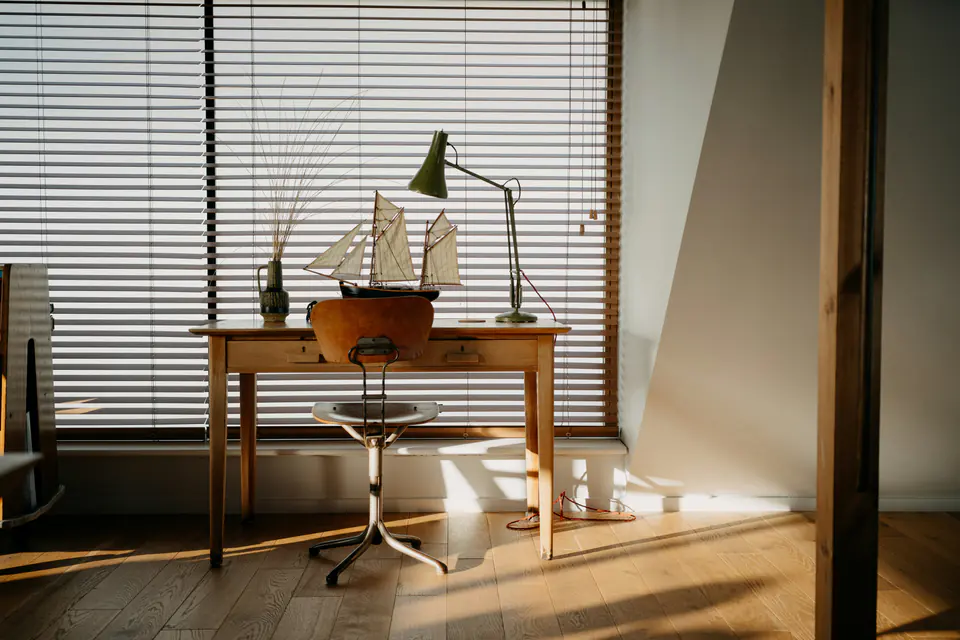
Short answer: start from how you work, not from a picture. Measure the height you need, the depth your screens need and the space the desk must fit, then decide how cables and power will reach it. Give the maker those numbers, your wood and finish, and how it gets into the room, and the quotes will be comparable.
Size: the three numbers that matter
Height. Sit in the chair you'll use, feet flat, forearms level, and measure from the floor to the underside of your forearms. That's roughly where the desk top should be. If more than one person will use it, or you want to stand some of the time, consider a height-adjustable base with a custom top.
Depth. Deep enough to put your screens at a comfortable distance with room for a keyboard in front. Big or multiple screens need more depth than a laptop.
Width. What fits the wall or the room, minus clearance for drawers, doors and the chair.
Measure the space, then measure it again with the skirting boards, radiators and sockets marked.
Cables and power
A beautiful desk with a nest of cables behind it is a common disappointment. Decide up front:
- Grommets: holes in the top for cables, with a cover. Say where.
- Cable tray under the back edge to hold power strips.
- Built-in power or USB in the top, if you want it (needs the right parts and an electrician for anything hard-wired).
- Monitor arms clamp to the edge or through a grommet. Tell the maker the model so the top is thick and strong enough.
Wood and finish
- Solid hardwood (oak, walnut, ash, maple) is durable and can be refinished.
- Veneered panels are more stable and cheaper, good for large tops.
- Finish: a hard-wearing lacquer or hardwax oil stands up to wrist rests, mugs and mouse use better than a soft oil. Ask the maker what they recommend for a work surface.
Our guide to choosing a wood species goes into more detail.
Drawers and storage
Drawers cost time: each one needs runners, a front and a box. A pedestal or a separate cabinet can be cheaper than built-in drawers. Make sure drawers don't hit your knees.
Delivery and access
Measure doors, stairs and turns on the way to the room. A one-piece desk that can't get through the door has to be built to come apart. Ask for knock-down joinery or a separate base and top if access is tight.
What drives the price
HomeAdvisor's custom furniture cost guide, which our woodwork prices page cites, lists custom desks at $1,500 to $10,000 in the US and custom woodworking labour at $50 to $100 an hour plus materials. Where your desk lands depends on:
- Wood species and top thickness
- Number of drawers and built-in storage
- Cable management and electrics
- Joinery and knock-down construction
- Finish
- Delivery and installation
What to send
- Height, depth and width, plus a sketch or reference photos.
- Wood and finish, or "maker's choice".
- Cable and power needs, and monitor arm model.
- Drawers or storage.
- Room access: doors, stairs, lift.
- Date and budget range.
Post it free on The Spool List and compare bids, or browse custom woodworking and furniture makers on The Spool List.
FAQ
Can I get just a custom top for an adjustable frame? Yes. Tell the maker the frame model so the top fits its mounting holes and weight limit.
Is a desk from veneer worse than solid wood? Not necessarily. Good veneer on a stable core makes an excellent, flat desk top.
How long does it take? Ask each maker. Lead times depend on their queue and on drying or finishing times.
Sources
- HomeAdvisor, custom furniture cost guide (published September 2021, as cited on our prices page)